
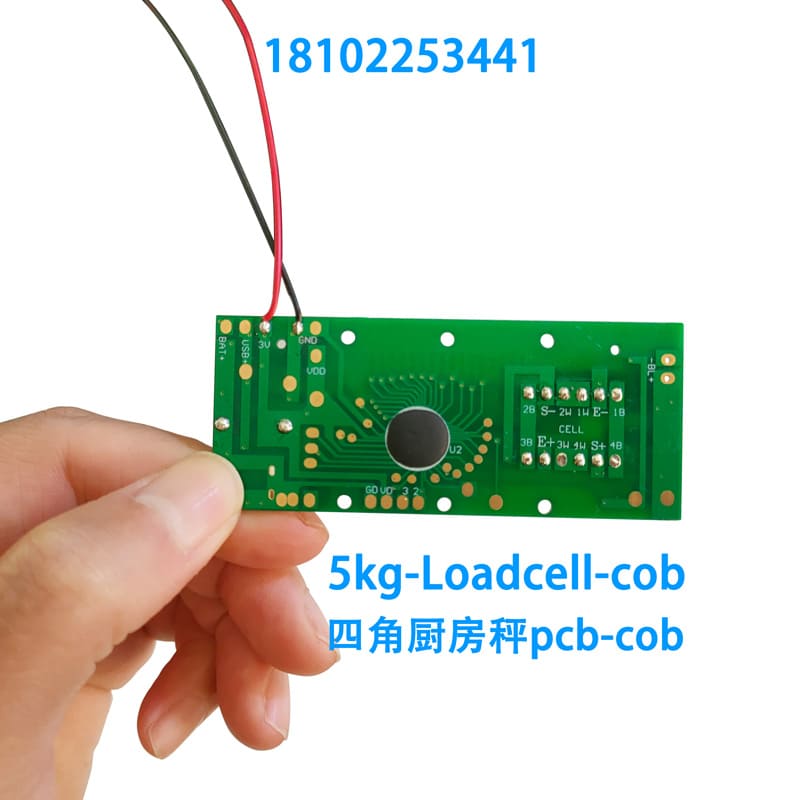
The product in the image is a 5kg load cell breakout board. It is a small circuit board that contains a load cell, which is a sensor that can measure weight or force. The breakout board provides a way to connect the load cell to other electronic devices, such as a microcontroller or computer.
Here are the steps on how to use a 5kg load cell breakout board:
- Connect the power supply: The board typically uses a 5V DC power supply. The positive lead (red wire) should be connected to the “VCC” pin, and the negative lead (black wire) should be connected to the “GND” pin.
- Connect the load cell: The load cell will have four wires. These wires should be connected to the pins labeled “E+”, “E-“, “S+”, and “S-“. The specific order of these wires may vary depending on the load cell, so it is important to consult the datasheet for the specific load cell you are using.
- Connect the output: The output of the load cell is an analog voltage that is proportional to the weight or force being applied. This voltage can be read by an analog-to-digital converter (ADC) on a microcontroller or computer.
The specific way you would use a 5kg load cell breakout board will depend on your application. However, here are a few general examples:
- Building a scale: You could use a load cell breakout board to build a scale to measure the weight of objects.
- Creating a force sensor: You could use a load cell breakout board to create a force sensor to measure the amount of force being applied to an object.
- Automating a process: You could use a load cell breakout board to automate a process that involves measuring weight or force.
It is important to note that using a load cell breakout board requires some electronics knowledge and experience. If you are not familiar with electronics, it is recommended that you consult with a professional before using one.